Eat With Confidence While Using Inhaled Insulin: Tips Every Woman Should Know
 Google Preferred Sources lets you personalize your search results. By choosing DiabetesSisters, you're telling Google to prioritize our content in your feed.

Summarize:
Inhaled insulin redefines meal-time insulin. If you are considering inhaled insulin as a meal-time insulin or have recently added inhaled insulin, your approach to eating may benefit from rethinking. Following are practical strategies to pair inhaled insulin with meals for optimal glucose outcomes, so that you feel informed, confident, and empowered.
What Makes Inhaled Insulin Different from Traditional Insulin
Inhaled insulin is a unique ultra-rapid-acting inhaled insulin that starts working within 12 to 15 minutes – ideal for matching after-meal glucose spikes. No planning or pre-bolus needed. More freedom in food choices. Inhaled insulin gets in, does its work, and is gone in about 1.5 to 3 hours, much faster than injected insulin. That means correction can be given an hour after eating – a game changer if you’ve used injected mealtime insulin. No more waiting 3-4 hours before correcting glucose elevations. It’s important to know that inhaled insulin does not replace any long-acting background (basal) insulin you may use.
When to Eat: 3 Tips to Align Inhaled Insulin with Your Meals
Timing flexibility is one of inhaled insulin’s most powerful features. It creates space for spontaneity in eating with less worry about being out of range.
- Take inhaled insulin right before the first bite. Have you ever ordered food for delivery, then received a notification that delivery is delayed? No worries. When the food arrives and you’re ready for the first bite, that’s the time for inhaled insulin. How would you feel with this flexibility?
- Easily add a follow-up dose if you’re unsure how much you’ll eat. Say, you’re going to a gathering where everyone brings food to share. You’re unsure what exactly is in each dish, or how much you’ll eat. Dose conservatively right before the first bite, then add to your dose if needed to cover extra food. How would you feel with less frustration?
- Split dose for longer meals. For multi-course meals/events where you eat over an extended period – think New Year’s Eve at a nice restaurant – you may find it helpful to take an initial dose at the start of the meal and a second dose midway through. This helps manage glucose rises that occur from sustained eating. Wouldn’t that be liberating?
What to Eat: 4 Practical Food Strategies for Inhaled Insulin Users
What should I eat now? That’s a common question women ask when starting inhaled insulin, given its unique action. There’s no reason to unnecessarily restrict foods since inhaled insulin’s quick action enables you to successfully enjoy everything from pasta to sushi to birthday cake if you so choose. Food should be a pleasurable part of life, not an added stressor.
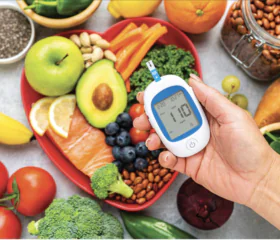
- Create meals using the Diabetes Plate Method. For women using inhaled insulin and balancing work, family, and health, the Diabetes Plate Method is a simple yet powerful way to manage glucose – without stress. This effective approach involves dividing your plate or meal into specific portions to ensure you’re consuming a balanced meal and managing carbs. The 2025 Standards of Care evidence-based guidelines for diabetes care encourage including a variety of nutrient-dense foods, and this approach helps accomplish that. No complex calculations, no special food—just smart portioning. A standard 9-inch plate is just the right size.
- 1/2 plate (or meal) non-starchy vegetables. Examples include salad greens, broccoli, green beans, carrots, and tomatoes. These are low in calories and carbs and packed with nutrients and fiber, perfect to fill you up without spiking glucose.
- 1/4 plate (or meal) lean protein. Good sources include fish, chicken, turkey, beef, eggs, and tofu. Protein slows digestion, keeps you feeling full longer, and helps blunt glucose spikes.
- 1/4 plate (or meal) carb foods. These include fruit, starchy vegetables, grains, dairy, and sweet treats. You may find apples, pears and berries affect glucose less than some other fruits due to their fiber. Likewise, the fiber in whole grains (think brown rice, quinoa, whole wheat, popcorn) means less glucose rise with than processed grains (like white rice and white pasta).
- Round out the meal with water or other calorie-free drink and a small amount of healthy fat if you want (avocado, nuts, olive oil).
- Include fiber at any opportunity. Fiber is a powerhouse in slowing digestion and helping to reduce glucose spikes. Combined with inhaled insulin’s quick action, eating more fiber can help you feel in charge of after-meal glucose. The 2025 Standards of Care call out that foods with 3 grams or more of fiber/serving, are considered good sources of fiber. Lentils, dried beans (like black beans, pinto beans), and oats are excellent choices.
- Choose foods with a low glycemic index (GI) frequently. If GI is new to you, it ranks foods from 0–100 according to how they raise glucose. Low GI is <55, whereas Moderate GI is 56–69, and High GI is >70. Low GI foods help prevent large or rapid glucose fluctuations. For instance, popcorn is a low GI snack at 55, while pretzels are high GI at 83. Learn the GI of favorite foods at www.glycemicindex.com. Combining inhaled insulin’s quick action with choosing lower GI foods more often can contribute to optimal glucose outcomes.
- Eat special meals with confidence. Meals that have a lot of carbohydrate, protein, and fat can cause a delayed after-meal glucose spike. Special meals like this are a part of life, and inhaled insulin allows enjoying them without guilt. For example, a woman shared a recent special occasion steakhouse meal that included a 10-ounce steak, 2 yeast rolls with butter, a green salad, and “pile of mashed potatoes” (in her words). She experienced that delayed spike and was quickly back in range with a follow-up dose of inhaled insulin.
How to Estimate Carbs Without Stress
Managing carbs can be exhausting. Many women are conservative when counting/estimating carbs to reduce risk of taking too much insulin. If you’ve used a fast-acting injectable meal-time insulin and are switching to inhaled insulin – OR – if you are new to inhaled insulin – the fast entry and exit make correction easy if a carb estimate is off. Now food feels less like a math problem and more like an experience. While there are a variety of approaches that women use to address carbs, here are 3 low-stress ways to estimate carbs to determine meal-time inhaled insulin dose:
- Use your fist size. Compare your fist to a 1-cup measuring cup (the kind used to measure dry ingredients like flour). A woman’s closed fist is about 1 cup on average, equal to about 30 g carbs. If your fist is the size of 1 1/2 cups, that’s equivalent to 45 g carbs. If it’s 2 cups, that’s 60 g carbs worth.
- Group foods intuitively. Meals with fewer carbs and more protein, non-starchy vegetables, and fiber may require a smaller dose, while carb-heavy meals (like pancakes or spaghetti) will call for a higher dose.
- Keep a “mental menu”. Do you eat many of the same foods from week to week? It’s said that most people have around 100 foods in their personal “food libraries”. Memorize the carb content of 5 or 6 “go-to” meals, then no thinking is required.
If you use a continuous glucose monitor (CGM), watch and learn from real-time feedback on how inhaled insulin covers different foods and portions. Manage carbs in a way that works for you. Do more of what works!
What to Do When Plans Change
Life happens. Plans change. One of inhaled insulin’s greatest strengths is how it supports real life. When meals get delayed or appetite shifts, inhaled insulin helps women respond instead of feeling stuck. Here are 4 tips when the unexpected happens:
- Want a snack? Inhaled insulin simplifies covering an unplanned snack or treat. Say you’re at a birthday celebration. You haven’t planned to eat cake, but it’s your favorite cake. A quick dose of inhaled insulin and you’re ready to enjoy a slice of cake. If you choose a protein snack like nuts or cheese, you may not need insulin.
- Ate more than expected? No need for panic. Take a follow-up dose to cover additional carbs.
- Skipped a meal altogether? If you haven’t taken inhaled insulin yet, there’s no issue. But if you have taken it and find you’re not as hungry as you thought, or you get called away from the meal, have glucose tablets, juice, or other hypoglycemia treatment available.
- Missed a dose? The dog is barking. Your phone is pinging with texts. You go to grab a quick bite and totally forget to take your inhaled insulin. You can react quickly to get insulin on board, and take correction in about 1 hour if needed to stay in range.
Since inhaled insulin comes in fixed-dose cartridges (4, 8, or 12 units), keep a variety to effortlessly adapt to eating changes. This flexibility means more focus on living life.
Final Thoughts on Eating with Confidence on Inhaled Insulin
Inhaled insulin enables you to eat with intention, adjust without guilt, and live with confidence that you are in charge of your choices. Meals are no longer bound by rigid timelines or fraught with anxiety. Instead, there’s room to breathe (literally) and to enjoy what’s on your plate.
- Perfection is not required. With some trial and error, you’ll quickly feel confident dosing inhaled insulin. Work closely with your healthcare team to experiment and make adjustments.
- Knowledge grows over time. The more you observe your response to different meals and doses, the more intuitive management becomes.
- You’re not alone. Join other women navigating similar experiences in online communities. Shared wisdom makes the journey easier.
Ready to learn more?
Visit our new Inhaled Insulin Hub for expert insights, tip sheets, and real stories from women like you. You’ll also find ways to connect with peers who are exploring or using inhaled insulin—because you don’t have to navigate this alone.
About the Author:
Tami Ross is a registered dietitian and a Certified Diabetes Care and Education Specialist. She is a national thought leader, speaker, and health and nutrition writer. Tami has authored 11 books and more than 100 peer-reviewed and consumer publications. She is a Past President of the Association of Diabetes Care and Education Specialists and has held numerous positions in state and national organizations related to diabetes care. Tami has devoted her entire career to the diabetes space, working in a variety of healthcare settings and her successful consulting business. Her passion lies in translating science into practice in ways that are understandable and doable, empowering those with diabetes to live life to the fullest.

Written by
Tami Ross is a registered dietitian and a Certified Diabetes Care and Education Specialist. She is a national thought leader, speaker, and health and nutrition writer. Read more from Tami.