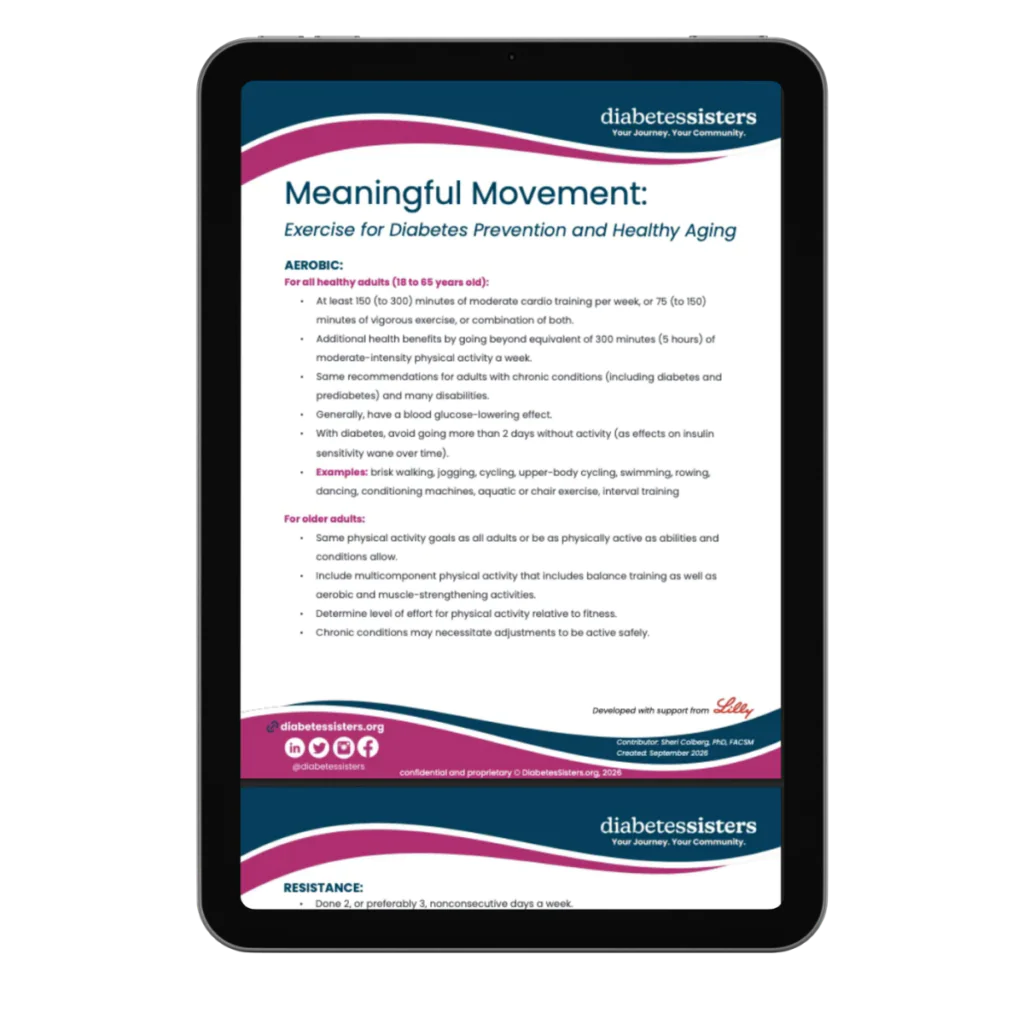
Meaningful Movement: Exercise for Diabetes Prevention and Healthy Aging

Overview
Regular movement can support blood glucose management, strength, mobility, balance, and healthy aging. In Meaningful Movement: Exercise for Diabetes Prevention and Healthy Aging, Sheri Colberg, PhD, FACSM, shares practical recommendations for building different types of movement into everyday life.
Key Takeaways
- Adapt movement to your needs. Older adults and people living with chronic conditions can modify activities based on their abilities, fitness level, and health needs.
- Aim for regular aerobic activity. Adults should work toward at least 150 minutes of moderate activity each week, such as brisk walking, cycling, swimming, or dancing.
- Avoid long stretches without activity. For people with diabetes, going more than two days without movement may reduce some of the benefits to insulin sensitivity.
- Include strength training. Resistance exercises two to three days per week can help maintain muscle, strength, function, and overall health.
- Make flexibility part of your routine. Stretching, yoga, and other flexibility exercises can help maintain mobility, especially as we age.
- Don’t overlook balance. Balance and functional fitness exercises can support stability, coordination, and confidence with everyday movement.
- Move more throughout the day. Small amounts of activity still count. Sitting less and adding movement whenever possible can provide meaningful health benefits.
- Break up prolonged sitting. Try standing, walking, stretching, or doing light activity about every 30 minutes when possible.
Fill out the form below to download
Written by

Sheri R. Colberg, PhD
Professor Emerita of Exercise Science from Old Dominion University and a global expert on diabetes and exercise