New Dietary Guidelines, Same Question: What Do They Mean for Women with Diabetes?

If you’ve seen headlines about the new 2025-2030 Dietary Guidelines for Americans emphasizing “real food,” higher protein, and fewer ultra-processed foods, you may have felt a mix of curiosity, relief, and maybe even skepticism.
For women living with diabetes—whether that’s type 1, type 2, gestational diabetes, LADA, or other types—making food choices isn’t just about “Is it healthy?” but “How will eating it make me feel?”, “How much will it raise my blood glucose?”, and “Is this something I can eat often or just every now and then?”
At DiabetesSisters, we believe nutrition guidance should support your whole life—not cause confusion or create added pressure or shame about what to eat. Here’s our perspective on what the updated guidelines get right, where caution is needed, and how women with diabetes can use them to guide their healthy eating plan.
What’s New in the Dietary Guidelines?
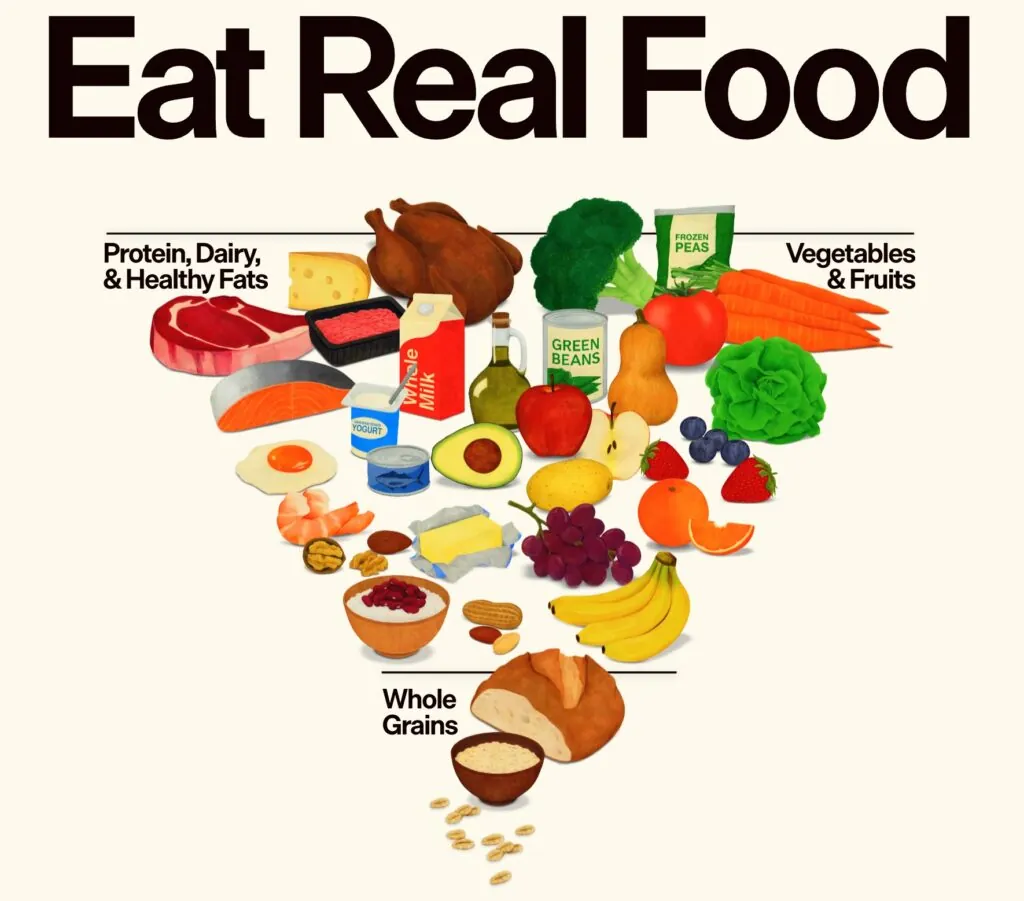
The updated guidelines focus on:
- Eating mostly whole or minimally processed foods
- Including protein at every meal
- Reducing refined carbohydrates (sugary or starchy foods with little fiber) and limiting added sugars
- Emphasizing fats that come from whole foods
- Acknowledging that lower-carbohydrate patterns may work better for some people with chronic conditions
What Hasn’t Changed in the Dietary Guidelines?
It is important to remember that the guidelines
- Serve as a national framework for a healthy dietary pattern (or a way to eat regularly over time to promote health)
- Are reviewed and revised every 5 years to reflect best practice and available evidence
- Provide general recommendations and are not designed for the specific treatment of people with diabetes or any existing health condition.
So if they aren’t meant to help you manage your diabetes, what can the Dietary Guidelines do for you?
What Can Be Helpful for Women With Diabetes
Whole, less processed (manufactured) food can help steady blood glucose
Highly processed foods (sometimes called ultra-processed) are often high in added sugars, fats, and salt. They can make blood glucose levels harder to predict and increase the risk of complications like heart or kidney disease. Focusing on whole foods can simplify day-to-day choices and, for some women, support steadier glucose patterns.
Foods with protein and fiber offer more steady energy and promote feeling “comfortably” full
Protein and fiber help slow digestion, prevent blood glucose spikes, and keep you feeling full longer. Many women notice fewer energy crashes and less constant hunger when meals are built this way. Consuming whole plant-based protein gives you the added fiber benefit. And if you choose animal protein, focus on lean sources that are minimally processed.
Continued focus on individuality
One recommendation doesn’t fit all, and the guidelines continue to highlight that there is no single “best” eating pattern for everyone. By placing less emphasis on non-whole grain carbohydrates and acknowledging that some people—especially those living with chronic conditions—may benefit from overall lower-carbohydrate approaches, the guidelines can continue to complement long-standing diabetes care guidance.
Where Women With Diabetes Need to Pause and Personalize
“Higher protein” isn’t right for everyone
Protein needs vary based on kidney health, age, pregnancy status, and activity level. Without taking into account your personal health condition, increasing protein significantly could be inappropriate—or even unsafe. Talk to your health care provider before making significant dietary changes.
Mixed messages about fat can be confusing
While the guidelines still recommend limiting saturated fat, they also elevate full-fat dairy and certain animal fats. For women with diabetes—who already face a higher risk of heart disease—this nuance matters. To be the most beneficial, food choices need to support both glucose management and protect heart health. Look for healthier fat options from nuts, seeds, extra-virgin olive oil, avocado, and soybean oils, and limit fats from more processed meat and dairy.
Trying to “avoid processed foods” can unintentionally create pressure
Almost all foods have some level of processing to get them to your table, and when time and money are limited, convenience and cost savings matter. At DiabetesSisters, we focus on progress over perfection and realistic steps that fit your life. Choosing foods with fewer ingredients more frequently, or reducing your portion size of more processed foods, are great ways to start.
Diabetes medications matter
If you take insulin or medications that increase insulin production, changing what and how much you eat—especially carbohydrates—without adjusting medications can increase the risk of blood glucose levels that are below- or above-target. That’s why it is safer to talk with your health care provider before making changes to your regular dietary patterns.
The DiabetesSisters Bottom Line
The Dietary Guidelines can offer a helpful direction for the general population, but are not a prescription for all. They are a guide to help health care providers and others build and tailor nutrition care plans for the people they support.
When it comes to nutrition recommendations for women with diabetes, it isn’t just whether a food is “real enough,” but whether what and when you are eating:
- Supports your glucose goals
- Works safely with your medications
- Protects your heart and kidney health
- Fits your culture, budget, and energy
- Feels sustainable—not restrictive
Your lived experience matters more than any pyramid, plate, or headline. And when you share your lived experiences with others, you can help grow your skills and confidence around food. Check out our virtual monthly meetups to talk about all things diabetes with women just like you.
What’s Next
In Part 2, we’ll focus on how to talk with your primary care provider or diabetes care team about the new guidelines—including what questions to ask, what information to bring, and how to advocate for a plan that works for you.
Continue to Part 2: How to Talk With Your Care Team About the New Dietary Guidelines
Reference:
U.S. Department of Agriculture & U.S. Department of Health and Human Services. Dietary Guidelines for Americans, 2025–2030. https://www.dietaryguidelines.gov