What the Guidelines Don’t Tell You: Making “Real Food” Work With Diabetes

If eating “by the rules” has ever felt overwhelming, frustrating, or impossible—you’re not alone.
Whether you are trying to follow guidance from your provider, your friends, or new resources like the updated Dietary Guidelines for Americans, it’s important to remember that what works for some, doesn’t work for all. Women’s bodies, lives, and responsibilities are constantly changing, and diabetes care doesn’t exist in a vacuum. Hormones, stress, caregiving roles, budgets, cultural expectations, and time constraints all influence blood glucose.
Here are tips designed to meet you where you are—focusing on flexibility and self-compassion—with a dose of reality!
Consider Hormones, Stress, and Life Stage
Before you do anything else, pause and give yourself the grace to acknowledge where you are in life and how it may impact your health. Menstrual cycles, pregnancy, postpartum changes, perimenopause, menopause, aging, stress, and sleep disruptions all affect blood glucose.
Changes don’t mean failure—they mean your body needs something different. Keep this in mind when making lifestyle changes. It may take a bit more trial and error to find what works.
Build Meals One At A Time Flexibly, Not Perfectly
There is no one-size-fits-all way to eat with diabetes. Use simple meal-building (protein + fiber + carbs) instead of rigid food rules. Flexibility supports consistency over time and leaves room for honoring cultural and comfort foods. One more balanced meal, planned snack, or other small change at a time can be meaningful.
Pair Carbohydrates with Proten and Fiber
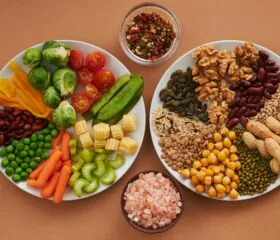
When eating carbs, ask “What can I add?”—like nuts with fruit, beans with rice, or eggs with toast—to help steady blood glucose. These types of pairings can help slow digestion and reduce glucose spikes. Use the Diabetes Plate Method to help you visualize how much to eat. When possible, aim for:
- ¼ plate protein
- ½ plate non-starchy vegetables
- ¼ plate carbohydrates
This works at home, in restaurants, and at family gatherings. Your hand can also help you visualize portions, use the palm of your hand to measure about 3 ounces of meat, fish, or poultry.
Work Within Budget, Access, and Energy Levels
As women, we generally put ourselves last and feel guilty when we don’t prepare fresh foods. But, quick meals, leftovers, frozen options, and convenience foods are valid tools—not shortcuts—when time is limited. Frozen vegetables, canned beans, eggs, yogurt, oats, rice, and peanut butter can support blood glucose without straining your budget. Take advantage of apps from retailers or grocery delivery services to search for deals before heading to the store.
Know the week ahead is going to be extra busy? Include 2–3 quick meals or snacks you can rely on during hectic days so you’re not skipping meals or making decisions when you’re exhausted.
Use Glucose Data for Learning, Not Judgement
Technology has made blood glucose tracking real-time. While super helpful for managing medications, it can also be overwhelming and stressful when meal planning. Blood glucose numbers reflect many factors—food, stress, illness, sleep, hormones, and activity.
Look for patterns instead of reacting to single numbers. If you notice above-target readings after a meal, try changing one thing next time—such as adding protein or fiber, adjusting portion size, or changing meal timing—and see what happens. Treat your glucose data like a learning tool, not a report card.
Ask for Help, Early and Often, From Women Like You
We are all on the hunt for “meal prep” hacks to promote health while saving time and money. While scrolling social can help, sometimes the best answers come from women who also balance living with diabetes and daily life. DiabetesSisters can help! You are never far away from a supportive community when you join virtual events like peer-led meetups, provider-led support groups, and more.
If you’re looking for more support around food and confidence with diabetes, these resources may help: