Cultural Foods and Diabetes Tip Sheet: Healthy Eating Without Giving Up Tradition
 Google Preferred Sources lets you personalize your search results. By choosing DiabetesSisters, you're telling Google to prioritize our content in your feed.

Sponsored Content
This content is brought to you with support from Lilly.
DiabetesSisters maintains full editorial independence over all educational content.
Summarize:
Key Takeaways
Cultural foods can remain an important part of healthy eating with diabetes. Small changes to portions, preparation methods, and meal balance can help support blood glucose and weight goals while preserving the foods, flavors, and traditions that matter most. The goal is not restriction, but finding realistic, sustainable ways to make meaningful foods work for you.
Overview
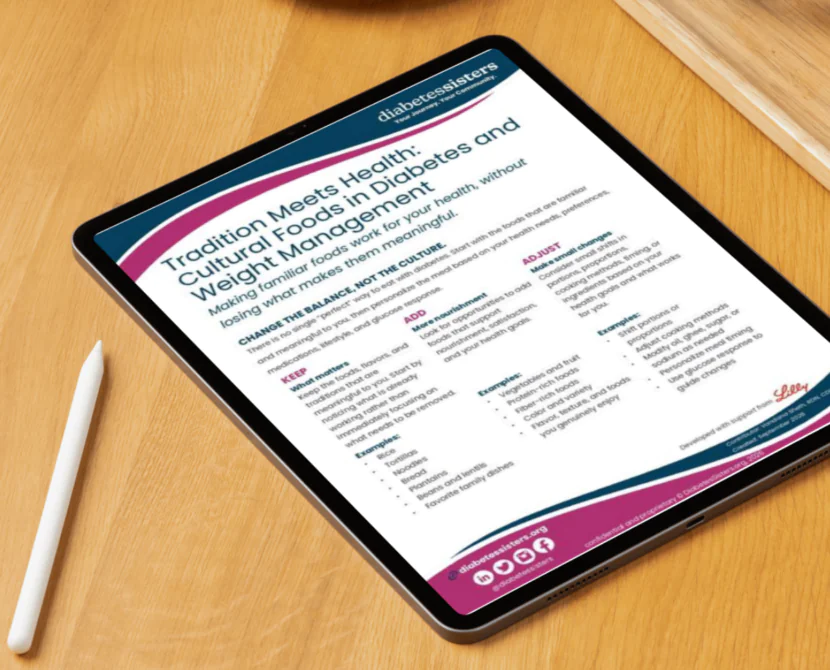
Healthy eating with diabetes doesn’t mean giving up the foods, flavors, and traditions that matter to you. Tradition Meets Health: Cultural Foods in Diabetes and Weight Management was developed by Vandana Sheth, RDN, CDCES, FAND, a registered dietitian nutritionist and certified diabetes care and education specialist.
This practical guide offers a culturally respectful approach to diabetes meal planning that starts with familiar foods and makes small, personalized changes to support blood glucose, nutrition, and overall health.
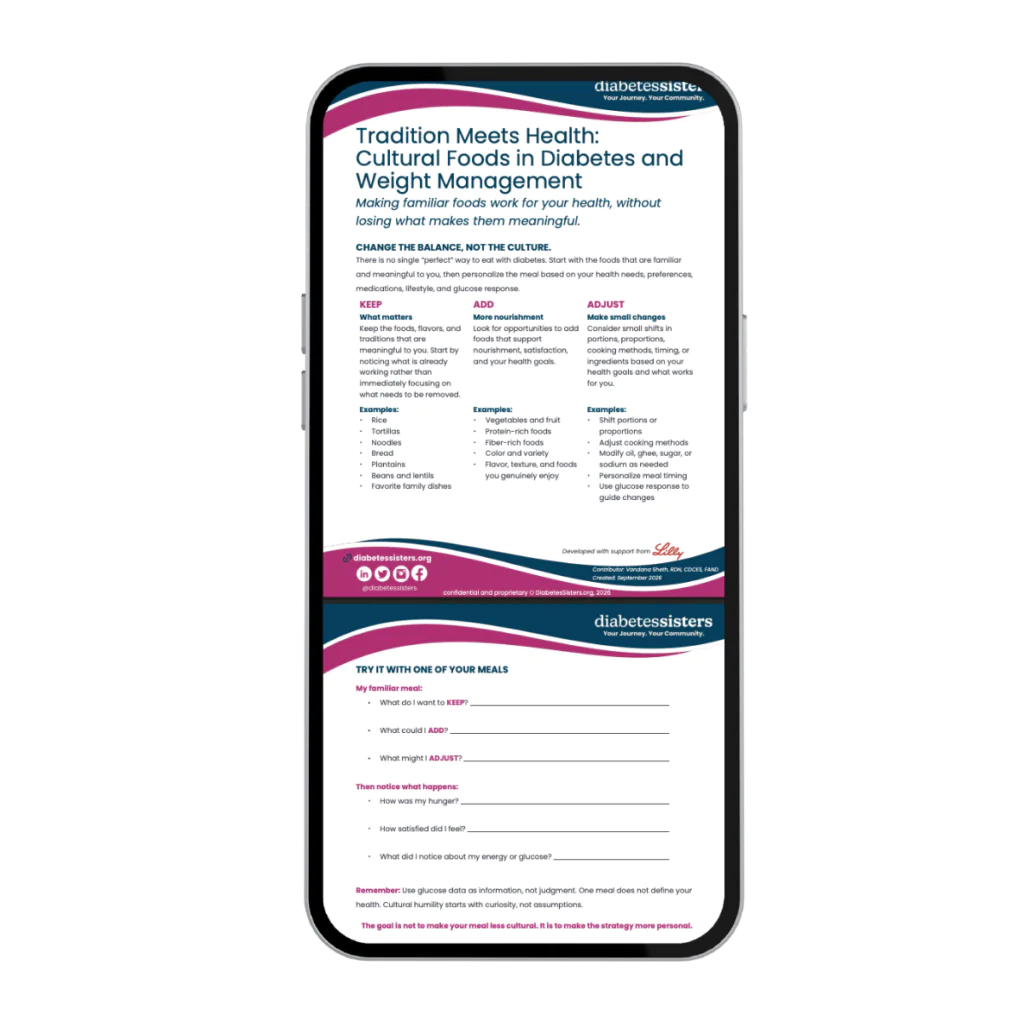
Using the Keep, Add, Adjust approach, you can keep meaningful cultural foods, add more nourishing options, and adjust portions, ingredients, cooking methods, or meal timing based on your health goals and glucose response. There is no single “perfect” diabetes diet—the goal is to make healthy eating work for your culture, lifestyle, and individual needs.
Key Takeaways
- Keep the foods and traditions you love. Cultural foods like rice, tortillas, noodles, bread, plantains, beans, and favorite family dishes can still fit into healthy eating with diabetes.
- Add more nourishment. Look for opportunities to include vegetables, fruit, protein-rich foods, fiber, color, and variety.
- Make small adjustments. Changes to portions, cooking methods, ingredients, added sugar, sodium, or meal timing can help support blood sugar management.
- Personalize your diabetes meal plan. Your needs may vary based on your medications, lifestyle, preferences, health goals, and glucose response.
- Use glucose data as information, not judgment. Notice how meals affect your blood glucose, hunger, satisfaction, and energy, then use those patterns to guide future choices.
The goal isn’t to make your meals less cultural. It’s to make your diabetes nutrition strategy more personal.

Written by

Reviewed by