Snacks To Get You Through the After-School Rush
 Google Preferred Sources lets you personalize your search results. By choosing DiabetesSisters, you're telling Google to prioritize our content in your feed.
Summarize:
That stretch of day between work, school dismissal, and bedtime can be hard to manage. You’re driving everyone around, perhaps still working from home, helping with homework, and preparing dinner while your own blood glucose quietly drifts in the background. If this window often catches you off guard, you’re not alone. This tricky time of day deserves its own plan, with snacks ready for wherever you are, and ways to make sure your own needs don’t get pushed to the end of the line.
Why the Afternoon Stretch Is Hard on Blood Glucose
By 3 p.m., it might feel like a lot is stacked against you. Lunch may have been early, small, or skipped entirely. You have likely been on the move for hours without much of a break, leaving you feeling stressed and rushed. Blood glucose can drift above or below target during this stretch, especially if dinner keeps getting pushed later.
Snacks with a combination of protein, fiber, and healthy fats are a great choice to hold you over during this stretch. Carbohydrates on their own digest quickly, so blood glucose rises and drops fast, leaving you hungry again when you don’t have time to deal with it. When grabbing a snack on the run, like at a vending machine or convenience store, ask: does this snack have something more than carbohydrates in it? Crackers alone will leave you hungry again soon. Crackers with cheese or nut butter will help get you through to dinner.
Snacks for Wherever You Actually Are
The best snack is the one you have with you when you need it. That looks different depending on where you are.
What to Keep in Your Bag or Purse
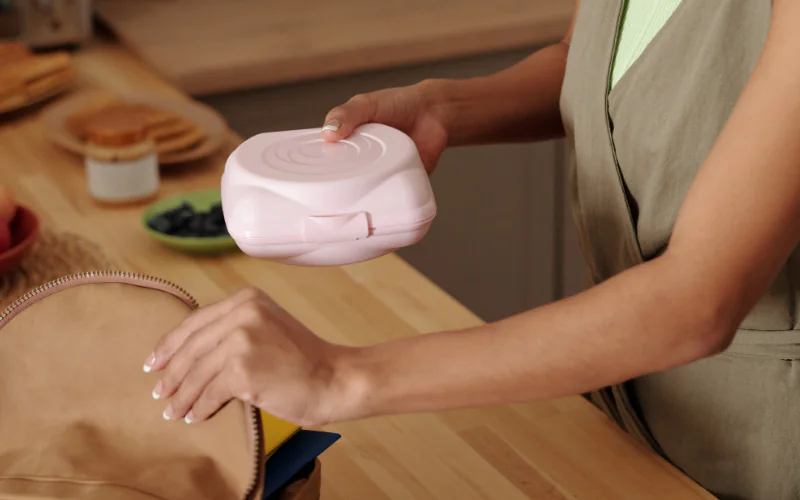
Your bag stash needs to survive being crushed, forgotten for a few days, and carried around everywhere you go. Check it weekly and restock what’s missing. A few things that hold up well include:
- nuts and seeds
- single-serve nut butter packets
- roasted chickpeas
- jerky or meat sticks
- single-serve tuna or chicken pouches
What to Keep in Your Car
Temperature is the deciding factor here, since a car in August and a car in January are two very different environments. Skip anything that can melt or that needs to be kept cool. Stash shelf-stable options in the glove box or center console and rotate monthly so nothing sitting through a hot or cold season goes to waste. A few things that hold up well include:
- dried fruit and nut trail mix
- roasted edamame
- whole grain crackers paired with shelf-stable cheese crisps
- shelf-stable nut and seed bars
Sporting Events, Waiting Rooms, and Practice Pickup Lines
These moments call for something one-handed, quiet, and needing no table, fork, or cleanup. If you know you’re looking at a long window, like forty minutes at a healthcare appointment or sitting through a practice, try eating something before you leave the house. If that isn’t an option, a few things that work include:
- cheese sticks paired with whole grain pretzels
- a piece of fruit or a bag of cut-up fruit or vegetables
- mini rice cakes with sunflower seed butter
- hard-boiled eggs
- protein bars high in fiber and low in added sugar
The 4-to-6 p.m. Kitchen Stretch
This is often the hardest window of the day. You’re cooking, homework is happening somewhere nearby, and dinner is still an hour off, so it’s easy to end up grazing on whatever is closest. The goal is choosing snacks deliberately to hold you over until dinner. Try putting a few of these options, several of which are also calcium-rich foods, on the counter on purpose:
- cottage cheese with fruit
- plain Greek yogurt
- cut vegetables with hummus
- apple slices with nut butter
When Your Blood Glucose Drops Away From Home
Keep your supply of fast-acting glucose separate from your everyday snacks, since it serves a different purpose. Stock glucose supplies wherever you keep snacks, in your purse, car, and any bag you take to games or activities, so it’s always within reach. Temperature matters here too, so check that whatever you’re carrying can hold up in the conditions it’s likely to sit in.
Having a supply is not always enough. It gets used and not replaced, buried at the bottom of a bag, forgotten in a hot trunk, or left past its date. Every week when you restock your snacks, glance at your glucose stash and replenish as needed. It also helps if someone close to you knows where things are kept, in case you ever need them to grab it for you. Your healthcare team can guide you on what to carry and how much to use when your glucose drops.
Building a Snack Stash Without Meal Prepping
Not every week allows for prepping ahead, and that is fine. You can build a nutritious and easy supply of snacks that require no advance work at all, just purchasing and having on hand.
Grab-and-Go Shopping List: Look for items that need nothing beyond opening a package. A few that qualify include:
- pre-boiled eggs
- seasonal produce
- bulk nuts
- canned beans
- store-brand yogurt
Pro tip: Buying a larger bag or container and dividing it into single portions when you get home is a simple way to save money without adding real prep time.
Reading a Label in the Store Aisle: You don’t need a deep dive into nutrition while standing in the aisle with a cart. Just keep in mind that a snack with some protein or fiber alongside its carbohydrates will generally hold you longer than one that is carbohydrates alone. Look at four numbers on the nutrition label:
- total carbohydrates
- fiber
- protein
- added sugars
The more protein and fiber a snack has relative to carbohydrates, and the less added sugar, the longer it will likely hold you over. The 5 and 20 rule can help. If a food has 5% or less of the Daily Value of a nutrient, it is a low source; if it has 20% or more of a nutrient, it is a high source.
Pro tip: Watch for packages that look like a single snack but actually list two or three servings on the label, since that significantly changes all these numbers.
By making progress on your snack routine, you may see that you have more time and attention to turn to meal prep and planning. For example, you could try prepping some quick and healthy lunches.
When You’re the Last Person on Your Own List
Everyone else’s needs seem to arrive with a deadline attached. The kids need to be picked up on time, homework has to be done before practice, dinner has to be ready by a certain hour. Your own needs rarely come with that kind of urgency, so they tend to move to the end of the list. It’s common to put everyone else’s needs ahead of your own, but a few small shifts can help.
- Eat something before pickup instead of waiting until dinner.
- Keep your own snacks in the same spot where you keep the kids’ snacks, so it is just as easy to grab.
- Treat your snack as a normal part of the routine, not something you have to earn by finishing everything else first.
Remember, a stocked bag on a hard day counts as a win, even if nothing else on your list gets checked off.
Ready for more ideas on balancing a busy life and diabetes? Join a DiabetesSisters Meetup or Support Group to connect with other women who understand exactly what this stretch of the day feels like.