Tip Sheet: Sleeping Well with Diabetes

Last Updated: August 2026
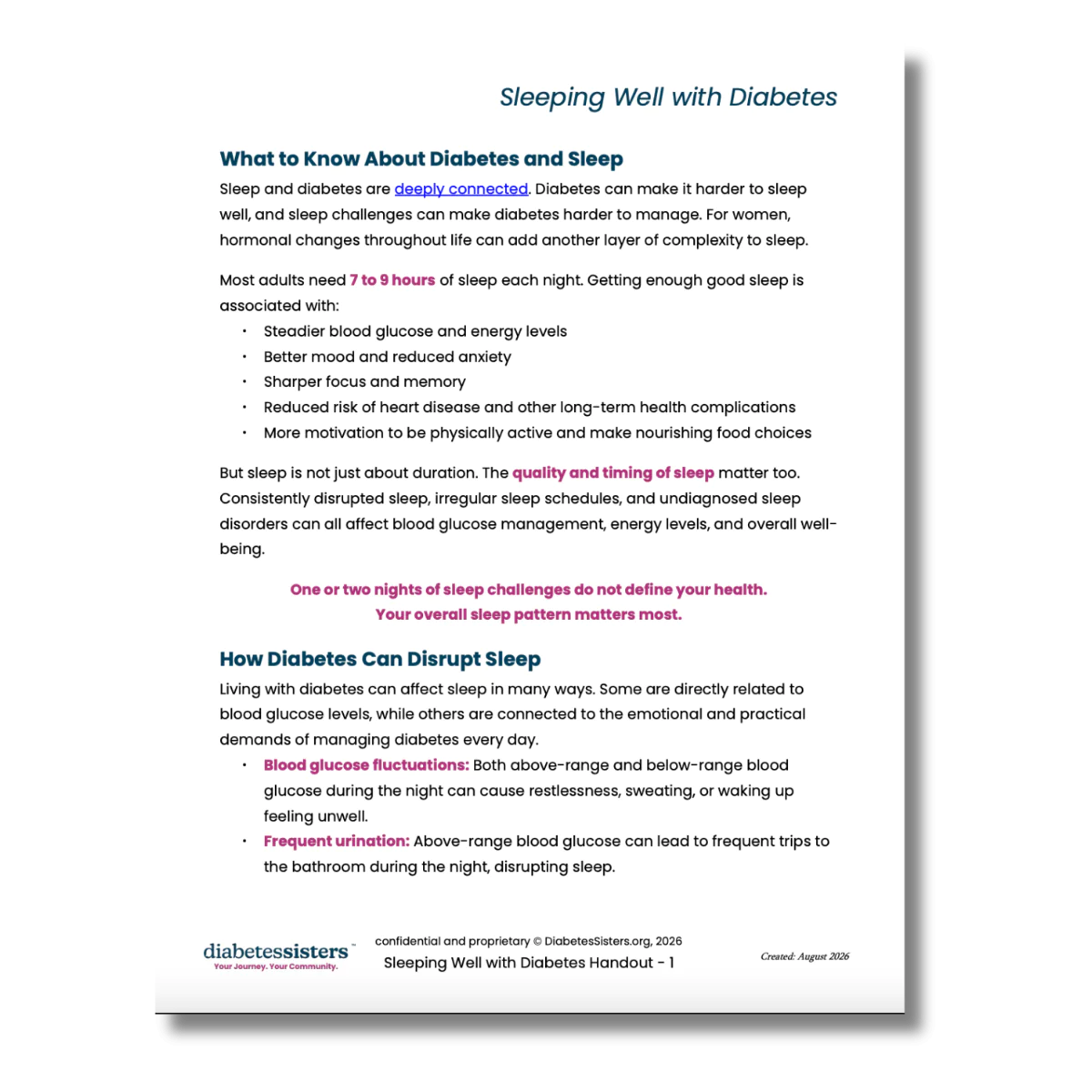
Sleep and diabetes can influence each other in many ways. Blood glucose fluctuations, device alarms, stress, discomfort, and hormonal changes can all make restful sleep more difficult, while ongoing sleep challenges may affect blood glucose management, energy, mood, and everyday diabetes care.
Sleeping Well with Diabetes explores this connection and offers practical strategies for improving sleep habits, recognizing common sleep disorders, and identifying small, realistic changes that may support better rest and overall well-being.
Key Takeaways
- Sleep and diabetes affect each other. Blood glucose fluctuations and the daily demands of diabetes management can disrupt sleep, while poor sleep may make blood glucose harder to manage.
- Quality and consistency matter. Getting 7–9 hours is important, but regular sleep timing and restorative sleep also play a role in overall health.
- Small habits can support better rest. Consistent bedtimes, morning sunlight, daytime movement, less evening screen time, and a calming wind-down routine can make a difference.
- Look for patterns. Tracking sleep alongside blood glucose, energy, and daily habits may help identify what supports or disrupts your rest.
- Persistent sleep challenges deserve attention. Conditions such as sleep apnea, restless leg syndrome, and insomnia are worth discussing with a healthcare provider.
Download the free Sleeping Well with Diabetes handout for practical tips to help you build healthier sleep habits and better understand the connection between sleep and diabetes.