Fresh Start, Stronger You: Resetting Your Diabetes Journey for the New Year
 Google Preferred Sources lets you personalize your search results. By choosing DiabetesSisters, you're telling Google to prioritize our content in your feed.

Summarize:
It’s that time of year again, when many of us take stock of our lives, set lofty goals, and envision a better version of ourselves for the new year. It’s the perfect time to reflect, restore, and reset, especially the health goals related to our diabetes journey. The possibilities are endless. It’s a new year, and we’re ready to go.
The first few weeks are usually amazing! You might be eating healthy and waking up at 4:30 to go to the gym or walk. You may be tracking your food and trying out new recipes. You’re doing great! Then on some random Tuesday, you stop. You just quit going to the gym, and your meals become a little less nutritious. Snacking increases and activity decreases. You’re overwhelmed and exhausted. It’s too much. Then you beat yourself up because your goals have slipped, and you revert to old habits. If this is you, you’re not alone. (Side note: Stop beating yourself up. It doesn’t help.)
Let’s be honest, most of us have found ourselves in this situation (some of us, many times). The question is, how can 2026 be different? How can we approach the new year so we are empowered, excited, and better set up for success?
Wanting to get stronger and healthier is a terrific goal, but I challenge you to approach it a little differently this year. Instead of focusing on the end goal (i.e., weight management), consider shifting your attention to the habits that will get you there. Our daily habits and actions are what drive our results.
Here are a few suggestions on how to do just that:
1. Identify daily habits that support your health goals
What are your daily habits currently? It’s okay to not really know. Many of us tend to do so many things without noticing, because we run from one activity to the next.
However, it can be valuable to take note of what your day looks like, such as:
- What do you do first in the morning?
- What are your lunchtime habits? Do you eat out every day?
- What do you do at night to set yourself up for success the next day?
- Which habits support your health goals?
- Which habits don’t support your goals?
- What could you do differently?
Once you identify the habits that support your journey you can build on them. The goal isn’t starting over; it’s expanding on what you already do. Want to drink more water this year? Treat yourself to a fabulous water bottle. Fill it up and take it with you everywhere. Set a timer for when you want to finish it, then do it again. Don’t like water? Try adding zero-sugar/zero-calorie flavorings, or try flavored waters.
One habit that was a game-changer for me during my weight management journey after I was diagnosed with diabetes was to pack my lunch every evening while cleaning up after dinner. That one habit, over time, made a huge impact. First, it controlled what I had for lunch, so I met my nutritional goals (no last-minute unhealthy choices for me to make), and second, it reinforced to myself and others that I am prioritizing my health over convenience.
Check in with yourself regularly and assess your daily habits and how they support your health goals. If one doesn’t work anymore, adjust it. Over time, you’ll discover the right combination by intentionally building habits that will get you where you want to be. And remember, habits that worked last year may need to be adjusted to what would be best for you now.
2. Take small steps—ridiculously small steps
Small changes win every time over grand gestures.
Imagine a tall ladder. A really tall ladder where your health goals are at the very top and you’re standing on the ground. Maybe you’re just starting your diabetes journey, or maybe you want to fine-tune your fitness. Whatever your goal, think about this: Would you rather climb a ladder with steps that are close together or wide apart?
Steps where you can keep climbing and making progress (whether you feel motivated or not) or steps that are so far apart that it takes Herculean effort to reach that next step? While we would all like to see faster progress by taking bigger steps, if we can’t reach the next step, we get frustrated and quit.
Taking small steps ultimately get us there because they are attainable and we don’t have to create a whole new reality to achieve them. Break your goals into small steps (the smaller the better—in fact, keep asking yourself if you can take even smaller steps), so you keep moving forward, build confidence, and keep going!
Some examples:
- Do you want to drink fewer sodas? Replacing one soda per day with water will make a bigger impact than cutting them out cold turkey, causing you to feel anxious and irritable, and then deciding it’s not worth the effort.
- Want to add more vegetables to your eating plan? You don’t have to consume huge salads or eat bundles of broccoli, especially if you don’t like the taste. Adding chopped veggies to your soups, stews, sauces, or omelets helps fill you up and increases veggie consumption without additional stress.
- Ready to move more? Park farther away from the building or use the stairs instead of the elevator. These small changes add up to big results over time…if you’re consistent.
3. Keep in mind it’s consistency over perfection
Speaking of consistency, that’s the goal – not perfection. Even under the most ideal circumstances, perfection is unattainable. We’re going to have missteps. We’re going to overeat, miss our workouts, eat too much sugar, or have one more drink because life happens. Striving for perfection sets us up to fail; it feeds into the “all or nothing” mindset, which can lead to self-sabotage and/or giving up.
When I was on my weight loss journey, I stuck to my program 100% of the time until one day, I didn’t. Circumstances prevented me from having 100% control over my food options at a meeting. I admit it caused me a lot of anxiety and fear because up to that point, I had complete control over what I ate.
However, I knew that sooner or later, on some future day, I was going to have to just do the best I could. What it taught me was that there will be times when I can’t eat my preferred food or do my favorite workout.
My challenge was to figure out how I was going to handle it. I did the best I could and jumped back on plan the next day. I realized I needed to build confidence in my ability to navigate situations where I wasn’t always in control, and this was a great opportunity to do that. I had to prove to myself I wasn’t going to make one ‘not perfect’ meal the excuse to give up and abandon my health journey. I learned that sometimes good enough is going to have to be good enough.
Letting go of perfection and consistently integrating small changes into our behaviors not only helps us enjoy life more, but it also allows us to be human. Showing up regularly is the key!
4. Celebrate yourself every day
Think about behaviors or actions you can take that celebrate you. How magnificent you are. How much you make the world a better place just because you’re in it. This is not just about pampering (though I think pampering is important and makes me feel fabulous), it’s about remembering to be kind to yourself. It’s about giving yourself grace while you are holding yourself accountable. Celebrating you should be a daily occurrence.
Ask yourself, “What makes me feel good? What is a reminder that I matter?” For me, it’s when I take a few hours on the weekend to prepare healthy meals for the week. I’m investing in myself so that I won’t be as tempted to make choices that don’t support my health goals. It’s a visual reminder that I’m worth it, not just to others but to me. Prep time is my time. Sometimes I listen to my favorite music or put on my favorite TV show.
Other ideas include reading daily affirmations, scripture, or a chapter from your favorite author. Still others do yoga or go for a walk. Whatever it is that celebrates you, do that. Connecting with yourself is important. Try to build in moments that ground you and help you to recalibrate.
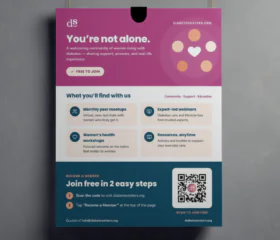
Having diabetes can be overwhelming. The good news is that you don’t have to do this alone. DiabetesSisters is here to support you in your health journey. They have valuable resources such as webinars and workshops designed to bring you up-to-date and relevant information. They also hold peer-led support groups (Meetups) to provide you with opportunities to ask questions, share your experiences, and connect with people who are walking this same path. Let DiabetesSisters help you put your health first and make 2026 your best year yet.
Words of Encouragement from the Author
About the Author:
Gretchen Holmes, PhD, is the author of The Work in Between: A Memoir About Stepping Out of My Shadows, podcast host of The Work in Between, and a motivational speaker. She is a 3-time cancer survivor and was diagnosed with diabetes in 2021. Since then, she has reclaimed her health and is passionate about helping others do the same.

Written by