Untangling the Knot of Weight and Diabetes Stigma

Have you ever been to an appointment where what seems to get the most attention is your weight? That was Sarah’s experience. She was at her provider’s office for a check-up. Before asking any questions or acknowledging the positive changes Sarah had made, the provider said, “If you just lost weight, this would all be easier.”
Ouch. Sarah shared how this made her feel. “I felt invisible. I mean, I was doing well with my diabetes management, but I left the office feeling defeated, alone, and with a lot of self-doubt.”
It’s a too often experience
When you feel people judge you because of your weight, make assumptions, or discriminate against you because of your size, you’re experiencing weight stigma. It can show up as:
- Assumptions: That you’re lazy, lack willpower, or don’t care about your health
- Discrimination: In healthcare settings, workplaces, and public spaces
- Structural barriers: Medical equipment that doesn’t fit, clothing that’s not available, seats that are too small
Weight stigma isn’t just happening around you. The voice in your head that echoes society’s judgment means that you’ve absorbed or internalized these harmful beliefs. And the effects are real. People who experience stigma are at greater risk of conditions like depression, anxiety, and disordered eating (Puhl et al., 2020). This makes diabetes management more difficult.
It isn’t linear and takes many forms
Intersectional stigma is when two threads cross and can become tangled into a larger knot. For example, weight and diabetes stigma can be compounded when individuals also experience stigma related to smoking, physical or mental health conditions, race, ethnicity, gender identity, or sexual orientation (Speight, 2024). We all have unique experiences of stigma—like individual threads, everyone’s knot can look different.
The threads of stigma are woven into society, including impossible beauty standards, one-size-fits-all food and exercise recommendations, and the assumption that weight loss improves health, fueling the constant pressure to be smaller.
Connecting weight bias and stigma to health outcomes
Many people living in larger bodies face negative attitudes, stereotypes, and blame from others because of their size. Weight bias can be blatant or implicit. Implicit weight bias occurs when a person is unwilling or unable to acknowledge these attitudes. This bias is fueled by the belief that weight is entirely within an individual’s control. Yet, a person’s weight can be determined by many factors, including genetic, biological, social, and financial.
Similarly, diabetes stigma stems from misconceptions that diabetes is caused by “poor choices” or lack of willpower. Diabetes stigma is when someone is blamed, judged, or excluded for having diabetes. Women are more likely to experience diabetes stigma (Speight, 2024). When these stigmas intersect, they create a painful cascade that makes managing diabetes both physically and emotionally more difficult. This can include healthcare avoidance, reducing or stopping medications, social isolation, and lower quality of life.
Untangling the knots of stigma
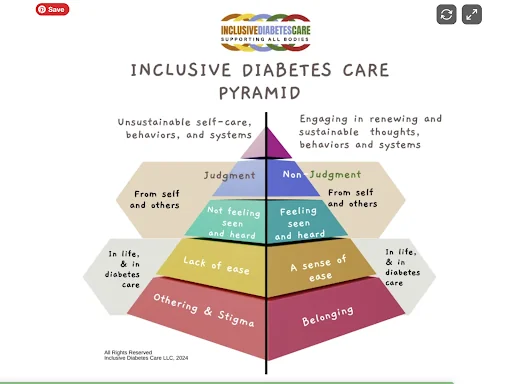
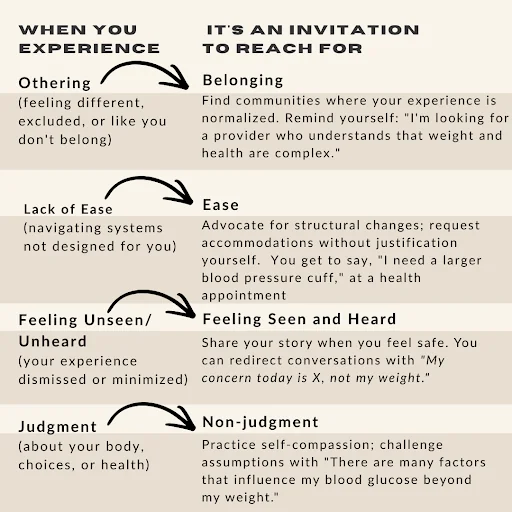
Loosening the knots begins when you feel you belong, you have a sense of ease, and feel seen and heard without judgment. The Inclusive Diabetes Care Pyramid (Fletcher, 2024) can offer ways to loosen the knot of stigma. On the left-hand side are the feelings often associated with the stigma. When you feel the knot of stigma tighten, use the right-hand side to untangle it.
- You belong: When you feel like you are isolated and alone with diabetes, join women-specific diabetes communities with support, like DiabetesSisters. You can also just start small; even connecting with one person who “gets it” can make a difference.
- Ease is a basic human need: Ease isn’t easy or being lazy. You need time and a place to take a deep breath and just be. When you feel overwhelmed, focus on what is working. Everyone is doing something right. To help you address what isn’t working, connect with an expert like a diabetes care and education specialist to find information, tools, and technology to help.
- Not feeling seen/heard: Most people don’t see all the things that you are juggling. If you feel dismissed by others, seek a weight-inclusive provider or a diabetes-informed therapist. Support from your peers is also critical. And remember to listen to and validate yourself: your experience is real, even if others don’t acknowledge it.
- Judgement to non-judgement: It is no fun to feel judged or blamed. Yet, judgment is a common knot that you often have to untangle. When you receive comments or blame for your weight or choices, seek providers who don’t moralize food or body size and pay attention to your own negative self-talk. Reframe these thoughts and reorient them to the truth. Diabetes is not a moral failing. Weight is not a measure of worth.
Inviting in sustainable self-care
These approaches invite you into a space of sustainable self-care. Untangling diabetes and weight stigma can feel like hard work some days, but the effort has big rewards that add up over time. For example, you may notice that:
- Self-care feels more doable and less overwhelming
- You have people who truly support you
- Your healthcare team partners WITH you, not against you
- You can tell the difference between helpful feedback and harmful judgment
- You have tools ready when stigma shows up
- Self-compassion comes more naturally
The knot of weight and diabetes stigma looks different for every woman. Some threads will loosen quickly, and others will take time, patience, and support. While it is easy to believe that something is broken or that there is a way to feel fixed, you are not the problem. Stigma is the problem. You deserve to manage diabetes without the added burden of weight or diabetes stigma.
About the author
Megrette Fletcher (She/Her) is a registered dietitian, diabetes care and education specialist, public speaker, and author. Her focus on decreasing stigma fuels her passion for weight-inclusive diabetes care, treatment, and prevention. She is the author of No Weight Loss Required, a weight-inclusive newsletter for folks trying to prevent or manage diabetes. You can learn more about her at megrette.com
References:
Fletcher, M. Inclusive Diabetes Care. (2024). Inclusive Diabetes Care Pyramid. https://inclusivediabetescare.com
Puhl, R. M., Himmelstein, M. S., & Speight, J. (2022). Weight stigma and diabetes stigma: Implications for weight-related health behaviors in adults with type 2 diabetes. Clinical Diabetes, 40(1), 51–61. https://doi.org/10.2337/cd20-0071
Speight, J., Holmes-Truscott, E., Garza, M., Castensøe-Seidenfaden, P., Lange, K., Vatier, C., IGDSSD Consensus Panel on Language & Stigma, D’Ardenne, P., de Wit, M., Hendrieckx, C., Kalra, S., Liu, N. F., Naranjo, D., Olson, K., Playford, C., Pouwer, F., Pratley, R., Puhl, R., Shaban, C., Young-Hyman, D. (2024). Bringing an end to diabetes stigma and discrimination: An international consensus statement on evidence and recommendations. The Lancet Diabetes & Endocrinology, 12(1), 61–82. https://doi.org/10.1016/S2213-8587(23)00347-9
Written by